

Gold Souk, old Dubai, and the Sea Walk of Al Fahidi
Introduction
The epicenter of historic city heritage is Old Dubai, and it can offer a splendid glimpse of how the city used to look before skyscrapers and high-end malls. The Al Fahidi historical district and the gold souk are among the popular places tourists can explore to experience traditional buildings, crowded markets, and the rich culture of locals. It is a guide revealing the most attractive places, secrets, and how to enjoy old Dubai.
Al Fahidi Historical District -A Stroll through History.
On the one hand, the Al Fahidi is currently among the oldest areas of Dubai, or Al Bastakiya. It is a small town, and narrow streets, wind towers, and ancient traditional courtyard houses make people feel comfortable in the metropolis. It is possible to visit the architectural heritage, art galleries, and the cafe coziness pass through Al Fahidi. Some of the houses are transformed into museums and cultural centers that represent the Emirati traditions, handicrafts, and traditional lifestyle. The best period during a day to have a walking tour is in the morning or in the late afternoon, since the light is good for displaying the color of the buildings, and the weather is not too hot.
Museums and Cultural Experience.
The Dubai history can be further commented on by some of the museums and cultural centers located in Al Fahidi. The Dubai Museum and the Sheikh Mohammed Centre of Cultural Understanding are highly interactive and guided displays. The tourists will have time to familiarize themselves with the traditions of the Emirati, the national cuisine, and the history of trade. The few galleries found in the middle of the small streets display the modern artworks, which are founded on the local culture, and this is a perfect spot to explore the culture.
The Gold Souk- Alluring Experience.
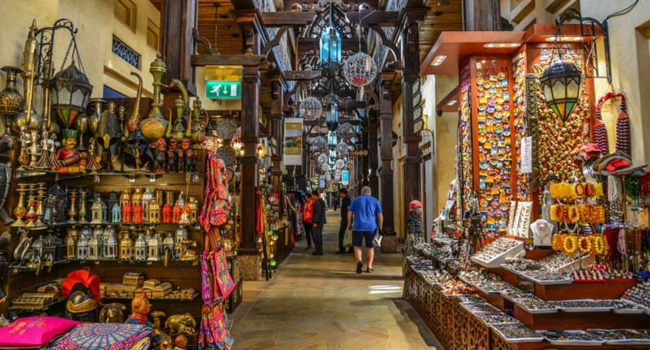
The distance to the Al Fahidi is short, the Gold Souk, Deira, a bustling market, where gold, jewels, and precious gems are said to be. The visitors are greeted with glittering necklaces, bracelets, rings, and watches since they live in the souk. It is also an experience that makes me feel good, and it is not a case that is simply left to be exciting but also enriched to a point of being culturally significant as a consequence of the bargaining. It has a shopping street, a picturesque outlook, and all the outdated shopfronts and crowded corridors in the history of the trade in Old Dubai.
Tips for Exploring Old Dubai
Like in the Gold Souk, you will have so much ease in wearing walking shoes and strolling down the alleyways and the market streets when you visit Al Fahidi. One needs to carry a bottle of water with them and sun protection, especially during the daytime. More probably, in case some individuals may be interested in shopping, then it would be recommended to be ready to negotiate in a diplomatic manner, as it is a usual and natural process of doing business in the souks. Their other facilities include guided walking tours, which on most occasions have a historical context, stories in the building, and an easier way of escaping through the maze of the streets.
In the Road of Gastronomic Pleasures.
The local food is plentiful in old Dubai. The small cafes found in Al Fahidi offer the national cuisine of the Emirati, such as majboos, hummus, and fresh bread. The Arabic desserts, teas, and coffee may also be tried in the Gold Souk and the next one, the Spice Souk. This type of snack adds the flavor component to the walking tour and also takes the guests to the cultural background of the city.
Photography and Hidden Gems
Al Fahidi and the gold souk can be described as ideal in terms of photography. The old buildings, the little streets, and the colorful market stands are the most interesting areas in which one can take pictures in the city. Among the objects of interest, one can distinguish such secret courts, typical wind towers, and spices that can be colored. Early morning or evening is a better time to visit Old Dubai when the number of people present in the place is less, and the lights in the area are brighter to demonstrate the beauty of the place.
The Spice Souk Sweet Smelling Tour.
The other sexual treat that Dubai Old Town can offer is the Spice Souk, just a couple of strides away. The market is characterized by bright colors, the smell of scent, and classical products. The tourists can choose various stalls of saffron, cardamom, dried herbs, and foreign spices from various parts of the world. Buying and tasting spices will allow the tourists to bring the Dubai history home. The Spice Souk can also be photographed due to the colorful heaps of spices and the natural texture, which makes for quite impressive pictures.
Textile Souk -Textiles/ Craftsmanship.
The Textile Souk has been extended to include the Spice Souk, where clients can purchase traditional fabrics, embroidery, and handcrafted merchandise. Customers are exposed to coloured silks, cottons, and linens, and they are able to enter business with craft traders in most cases. The long history of the emirate trade and craft can be studied in the space, and it is also a good area where one is in need of the unique souvenirs or gifts that have been influenced by the culture. An afternoon walk in the souk is also an experience that provides an insight into the life that the residents and the tourists are living in Old Dubai, where people live and interact in the small streets.
Walking between Al Fahidi Courtyard Cafes.
After exploring the bustling markets, one can have a rest in one of the beautiful cafes in the courtyard of Al Fahidi. These include the sale of the traditional Emirati coffee, tea, and snacks with a traditional architecture as the arrangement. Courtyard cafes would be a nice break against the heat, the people, not to mention that they will also help tourists to experience the pace of the Old Dubai life. It is also possible that some cafes have cultural talks or art exhibitions, and thus give something educational to the visitor.
The Installation Arts and Hidden Museums.
There are few and unspecialized art installations and museums in the Al Fahidis, and the majority go to large museums. They include individual collections of traditional jewellery, historical collections, and Emirati art. This is one of the offbeat attractions that allows the traveler to experience a more personal and informal tour with close-up encounters with the curators or artists in the majority of cases. These spots also possess unique opportunities to take photos, and they are able to bear witness to the actuality of native culture that people are likely to forget.
Conclusion
The Al Fahidi and the Gold Souk walking tour cannot be separated as part of the city tour because it provides tourists with a complete image of Dubai’s history, culture, and business. Old Dubai is a world of many colors, and its silent streets and exhibition halls, crowded markets, and glowing gold. As a historical lover, a photo lover, a shopper with something out of the ordinary visiting the places, it will be an experience that will make you have a real and memorable experience at the center of Dubai.
FAQs
When is it better to visit the Gold Souk and the Al Fahidi?
Afternoon or early days are better because one would get fewer people around and the cool temperature would have been acquired.
Is there any entrance fee to the Al Fahidi Historical District?
It does not have a restriction on the entrance, and the entry fee in some of the museums or cultural centers may be minimal.
Is Gold Souk a bargaining market for tourists?
Yes, bargaining is natural, and it is the taste of the cultural souk.
Does it have any guided tours of Old Dubai?
Yes, the walking tours of history, the behind-the-scenes stories are also available from some of the tour operators.
Do you believe you can be left lonely in such places?
The Al Fahidi and the Gold Souk are not the places where people should avoid coming to, but it is always better to be careful and leave personal values in safe places.